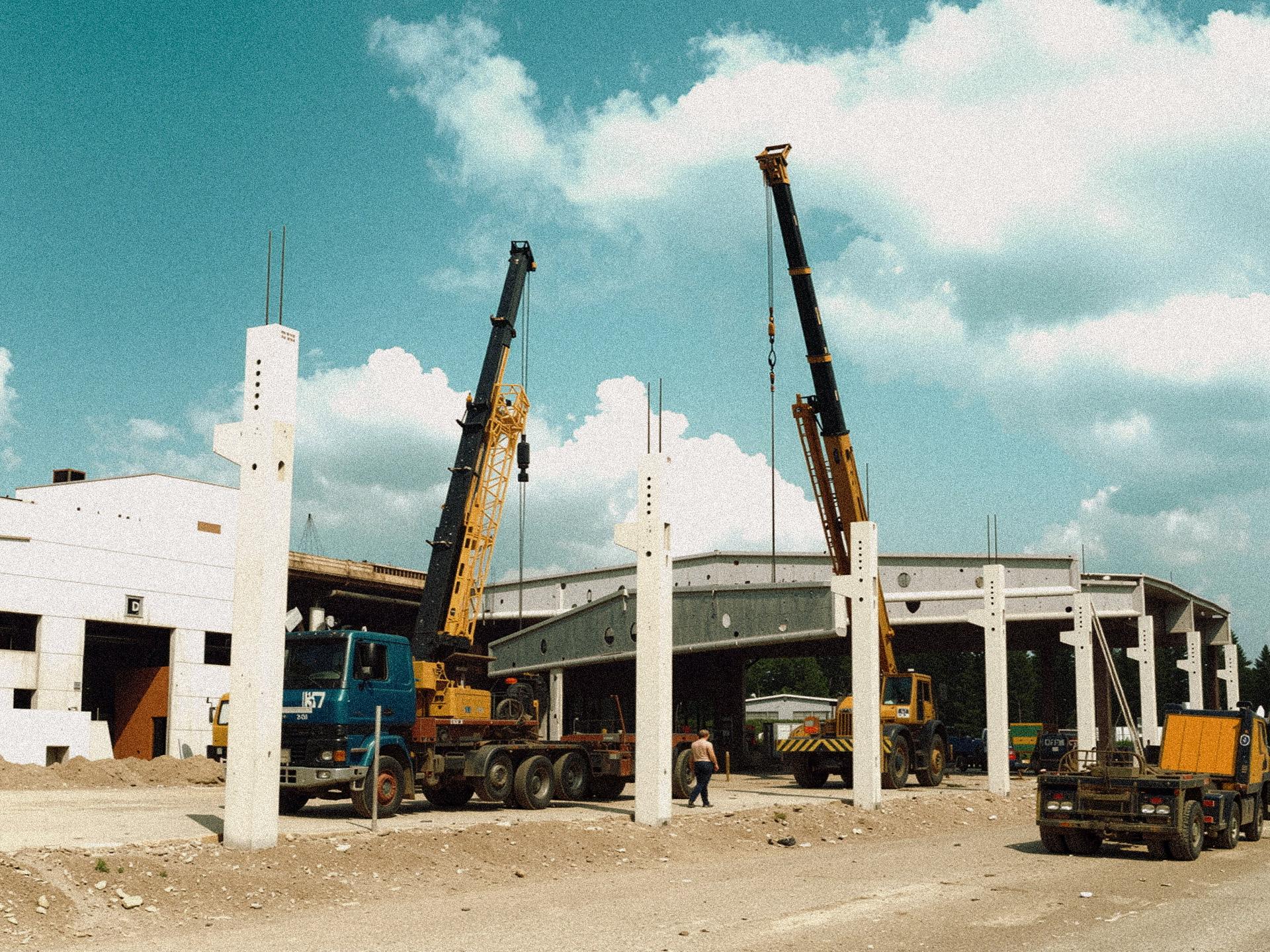
1997–1999 — Years of international expansion
During its first 30 years, Ponsse took steps towards international expansion, learning valuable lessons along the way while keeping its focus firmly on the future.
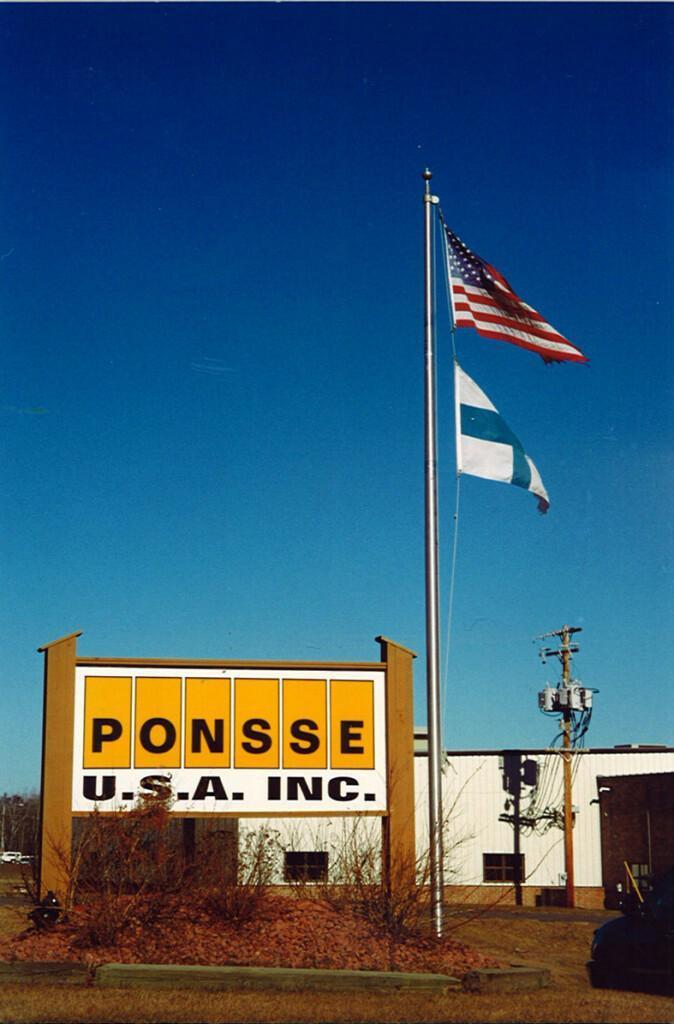
In 1994–1995, Ponsse established subsidiaries in Västerås, Sweden; Neath in North Wales, United Kingdom; Gondreville in north‑eastern France; and Atlanta, Georgia, in the United States. *)
In the first couple of years in the United States, it became clear that Ponsse’s best
chances of success were in the northern Great Lakes area. In August 1997, the subsidiary relocated to Rhinelander, Wisconsin, where a maintenance and spare parts operation was already up and running.
At the end of the millennium, Ponsse took carefully considered steps internationally, establishing a marketing company in Kongsvinger, Norway, in 1998, as well as a new site in Sabres, in the plantation forestry region of southern France. Operations in the United Kingdom were moved from Wales to Beattock
in Scotland.
In the United States, a site was established in West Monroe, Louisiana, followed
by another in Grand Rapids, Minnesota, the following year.
As Ponsse expanded internationally, the popularity of its forest machines kept growing, and a 2,500 m² extension to the Vieremä factory was completed in late 1997. The new facility housed machining centres, welding stations and an automated paint shop. In May 1999, the company celebrated the completion of a 6,000 m² extension to its production facilities.
At the turn of the millenium
Around the world, the approaching turn of the millennium caused concern, with both the media and the public painting Y2K scenarios of collapsing information systems. Ponsse’s business operations were largely dependent on information technology. Ponsse addressed the issue well in advance, ensuring that its
forest machines’ information systems would continue to operate normally after the turn of the millennium.
In 1999, the United States Customs Service imposed USD 3.35 million (FIM 18 million) in penalty duties on Ponsse for an incorrect customs classification of its machines. Between 1995 and 1998, machines had been exported to the United States under the duty‑free classification “forest machinery”. According to Customs, the correct classification for forwarders should have been “motor vehicles for the transport of goods”, a designation many felt applied more appropriately to lorries. After reviewing the case, Ponsse deemed it best to pay the customs duties together with the penalty charges.
Poor sales in 1999 brought further concern for the founder, Einari Vidgrén, as Ponsse carried out the first temporary layoffs in its history. “It was the most unfortunate moment in all of Ponsse’s history, having to lay people off, but we couldn’t just have people walking around with nothing to do,” he said.
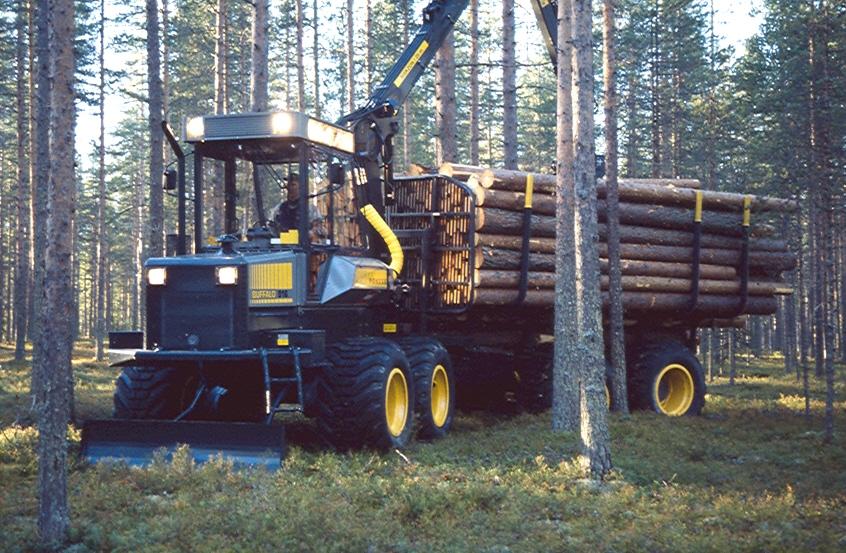
There was an oversupply on the market, and some newspapers wrote that Ponsse had itself to blame, arguing that the company had not learned how to engage in export trade. Compared with its competitors, Ponsse had entered the export markets relatively late, but it proceeded in a considered and cautious manner, selling forest machines only in regions where it could ensure maintenance and spare parts services.
Encouraging developments towards the end of 1999 included the opening of the Swedish subsidiary’s first service point in Surahammar and the establishment of a third service centre in France, located in Peyrat‑Le‑Château in central France.
As Einari put it: “When you venture into the wider world, you soon find it has its own twists and turns.”
*) The years 1994–1995 were discussed in the 55th anniversary issue of Ponsse News.
Source: Arttu Käyhkö, Ponsse – 50 years of the world’s best forest machines, 2020
Ponsse 30 years ago – On the crest of the data wave
In the mid‑1990s, Ponsse harvesters could be equipped with either the Ponsse OPTI or the Ponsse 1000 measuring device. At that time, OPTI was a highly advanced information system that measured stems with millimetre accuracy, creating a mathematical model of each stem, predicting its behaviour and allocating it into different assortments before cutting.
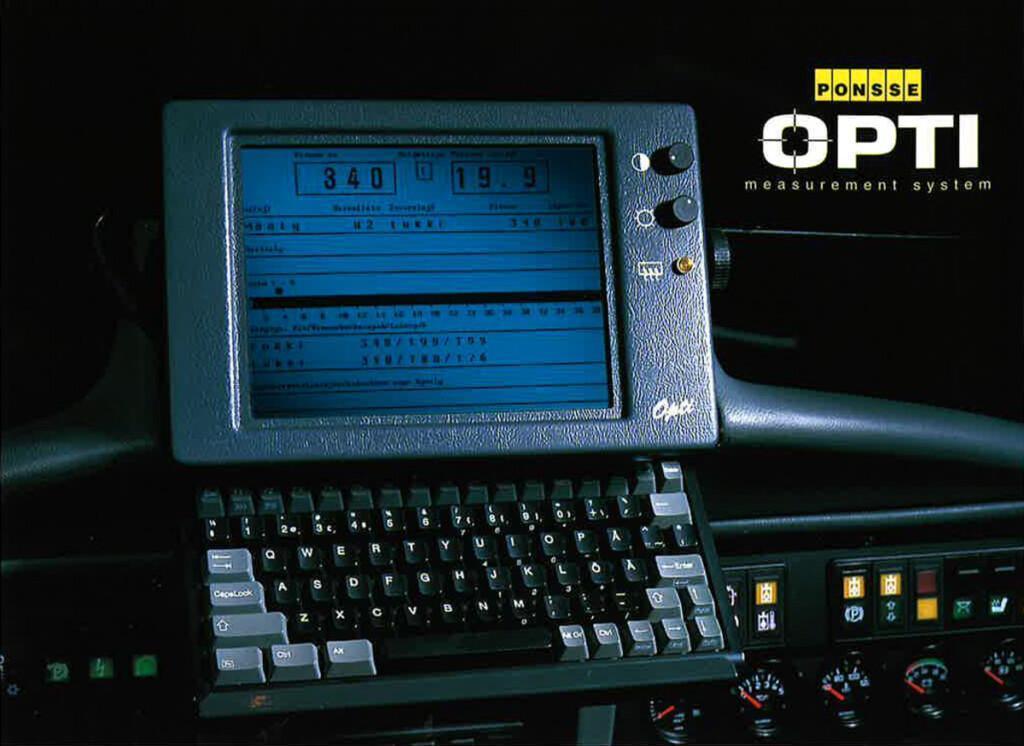
OPTI could be programmed with four tree species, and its memory could store 32 assortments, ranging from pulpwood to saw logs and from spruce veneer logs to birch for plywood. OPTI was equipped with automatic bucking optimisation, but
the harvester operator could also perform the bucking manually if desired. OPTI also featured control and calibration measurements, a cabin printer, real‑time two‑way data communication and automatic colour marking for different tree
species.
The Ponsse 1000 measuring device was implemented using semiconductor technology. Its technical features included a modular design, automatic colour marking and stump treatment. In the Ponsse 1000, stem measurement was based
on triangulation, with volume measurement being continuous and carried out in increments of at least 10 centimetres. The registers could hold four tree species, four log sorts per species and four pulp types per species. The preselection included length calibration with an accuracy of one per mille per species, while
the Ponsse 1000 controlled all the harvester head functions. The measuring device was supplied with the harvester’s cabin printer, and electronic calipers used for calibration were available as an accessory.
In 1997, Ponsse was the first to offer internet data transfer as standard on all its harvesters. The internet connection made it possible to monitor production almost in real time for the first time for the timber procurement chain.
Source: Arttu Käyhkö, Ponsse – 50 years of the world’s best forest machines, 2020