A modern factory guarentees safety
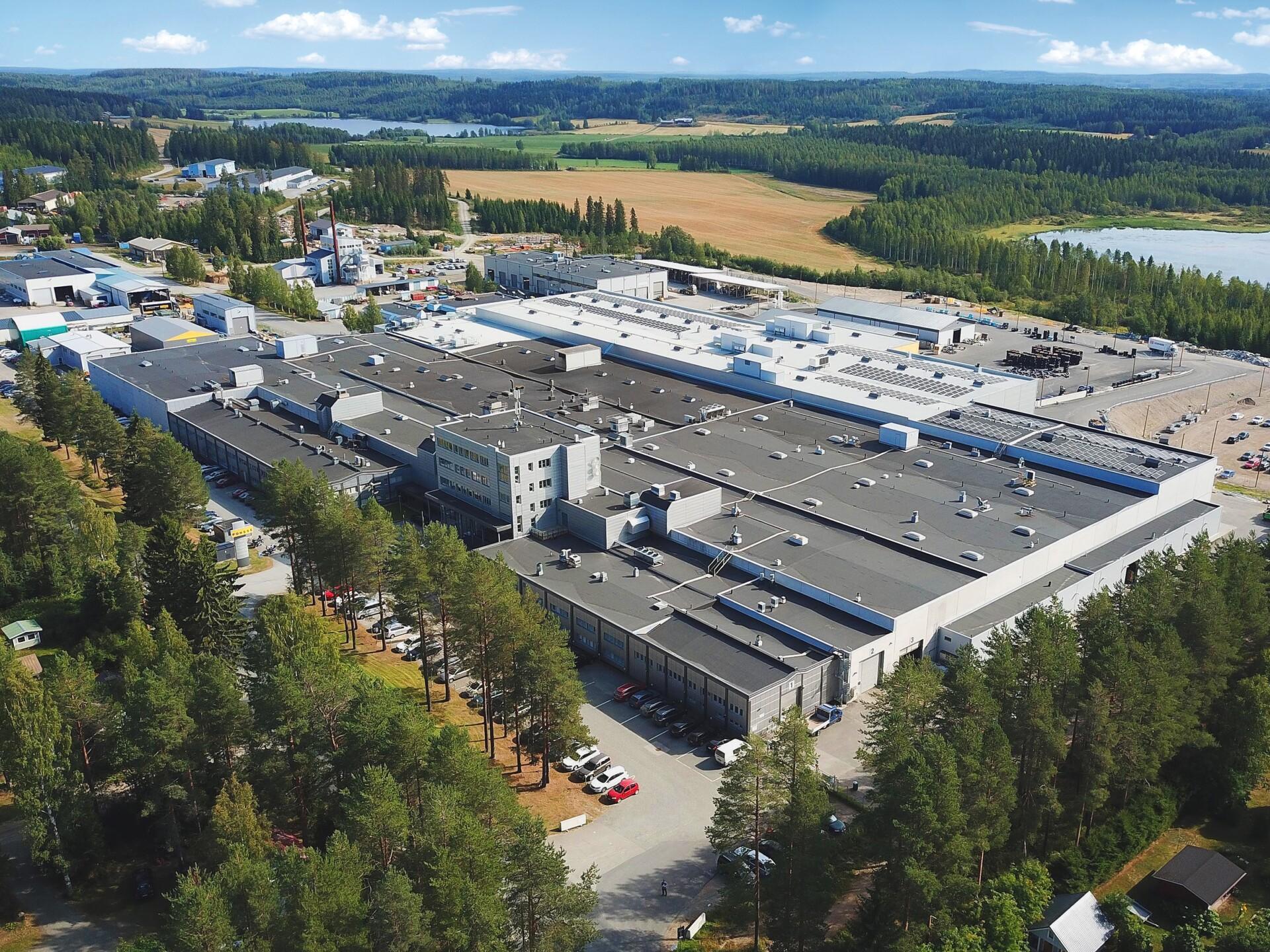
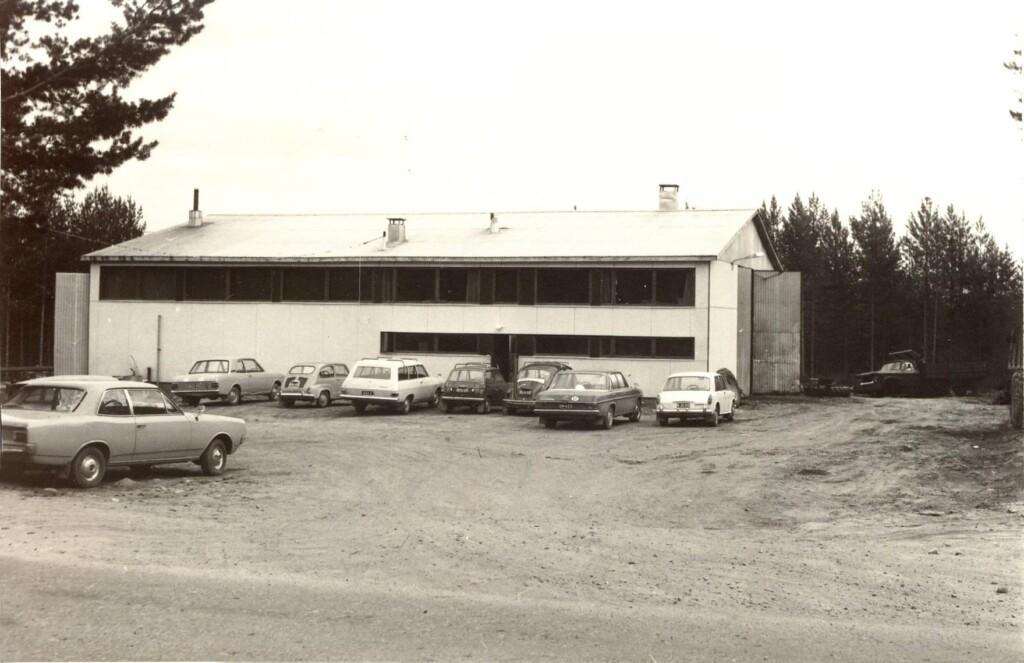
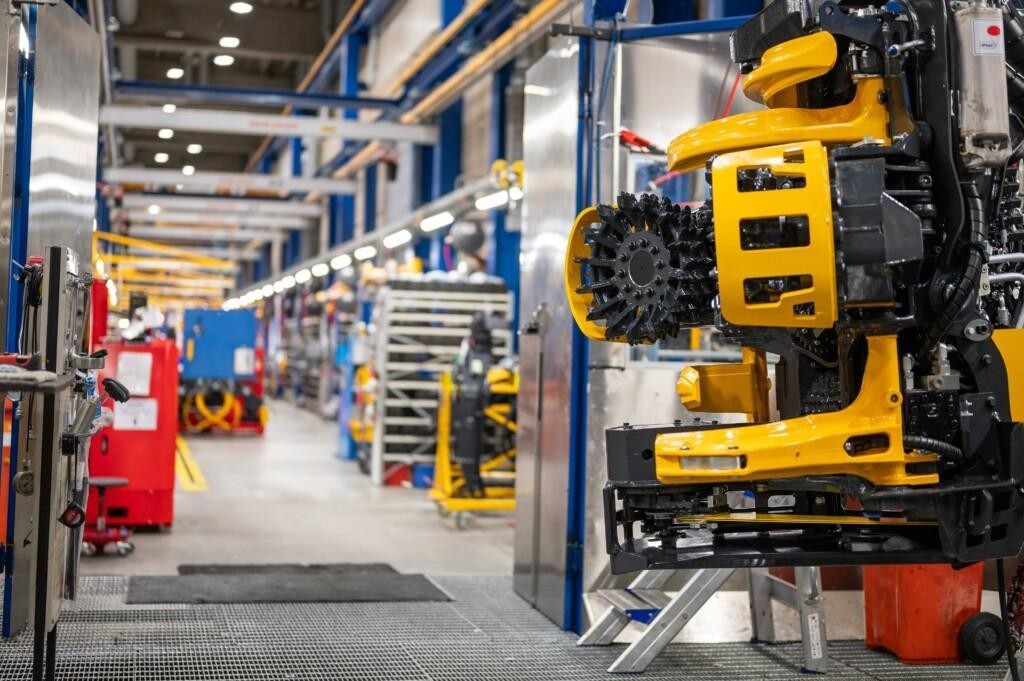
Ponsse’s factory, originally only 300 square metres in size, was built in Vieremä in 1970. After decades, the factory is still standing in the same place. During its history, the factory has been expanded 16 times, and the current size of the factory area is four hectares. The last 1.3‑hectare extension was commissioned in 2018. The factory area is home to prototype testing facilities, as well as testing and delivery equipping areas. The factory modernisation focused especially on wellbeing at work, safety and ergonomics.
All PONSSE forest machines and most of the components used in forest machines are
designed, manufactured and tested in Vieremä. Ponsse’s factory is designed to serve customers in machine acquisitions throughout the lifecycle of machines. This way, quality control of machines and components, as well as lifecycle and risk management, remain in Ponsse’s own hands.
The quality organisation covers four main processes: quality control, production support, measurements and new products, and sustainability. Welded structures are continuously inspected using spot checks and by X‑ray, if required. Ultrasonic measurements, magnetic particle inspections and visual inspections are also used in quality assurance. The latest addition in quality assurance is a robot-controlled camera measuring system, which renders a perfect image of the object being measured,
allowing this image to be compared to the designed 3D model.
Efficient and sustainable production
At the factory, the parts manufacturing and assembly of forest machines has been standardised as modular, whereby different machine models can be manufactured through a single manufacturing process following takt time. This allows customers to flexibly select the properties they want for their forest machine. Product information is also retained in Ponsse’s systems so that the maintenance measures, control system updates and component replacements directed at a machine over time can be saved in machine information.
In conjunction with the 2018 expansion, an automated warehouse was built to streamline operations in logistics, and assembly underwent a complete change. The capacity of the frame machining centre was also increased. Building systems are based on the latest technological solutions. As an example, a solar power plant has been installed on the factory roof, whose solar panels cover 2,000 square metres. The system’s capacity is equivalent to the annual electricity needs of 100 homes. Lights have been replaced by LEDs, and the braking energy of automated warehouse systems is recovered. Recently, the factory’s automation rate has been increased.
During 2024, liquefied petroleum gas was replaced by biogas in the paint shop’s drying plant. Previously, the consumption of LPG accounted for more than 90 per cent of emissions from production in Vieremä. Biogas is expected to reduce annual emissions by roughly 215 tCO2e. In addition, local biogas production strengthens energy self-sufficiency and reduces dependence on fossil fuels.
The factory is controlled by takt time, which is based on the annual volume estimated
by sales. The annual volume is adjusted at regular intervals in the sales, warehouse and
production planning process. Takt time takes into account the factory personnel’s days off, training and joint meetings. The completion of a single machine takes about 460 working hours, or 7–8 working days, starting from the manufacture of main components. Every PONSSE forest machine entering production already has a customer, and no machines are manufactured in stock.
From components to to forest machine
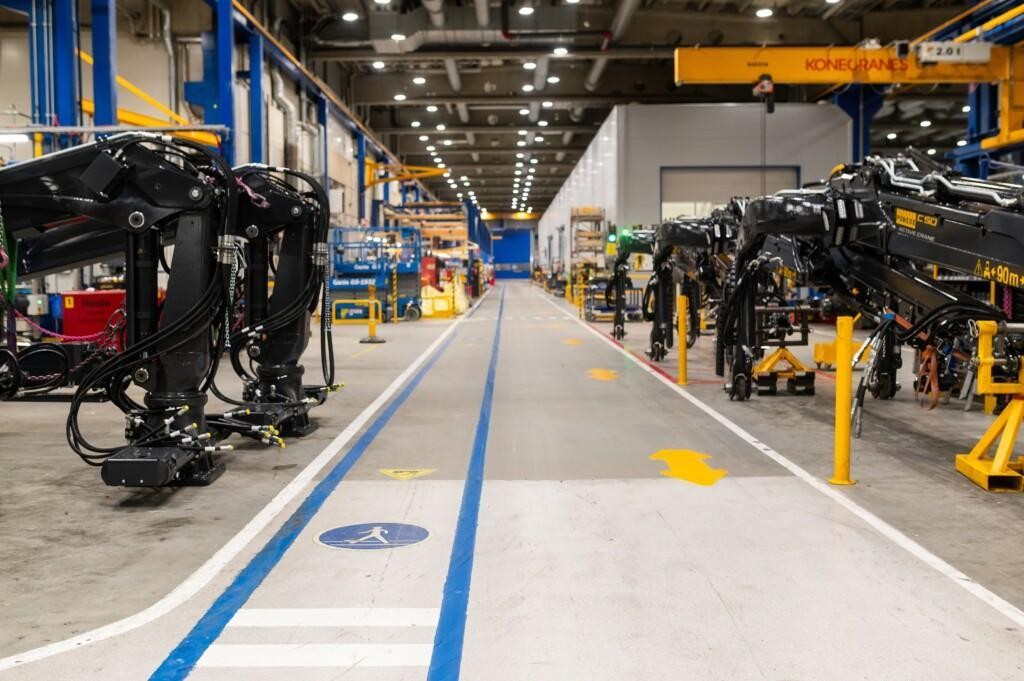
Assembly consists of four main component assembly lines: crane assembly,
cabin assembly, frame pre-equipping, and rear frame equipping. The component assembly lines feed a 180-metre base machine assembly line, where machines are given their final shape with the selected adjustments, and their test drive readiness is ensured. In production, harvesters and forwarders can be manufactured flexibly on the same line, and all assembly teams know how to assemble all machine models in production. At the end of the main line, machines are tested before their test drive. Testing ranges from hydraulic adjustments to calibrations and tests related to
control systems.
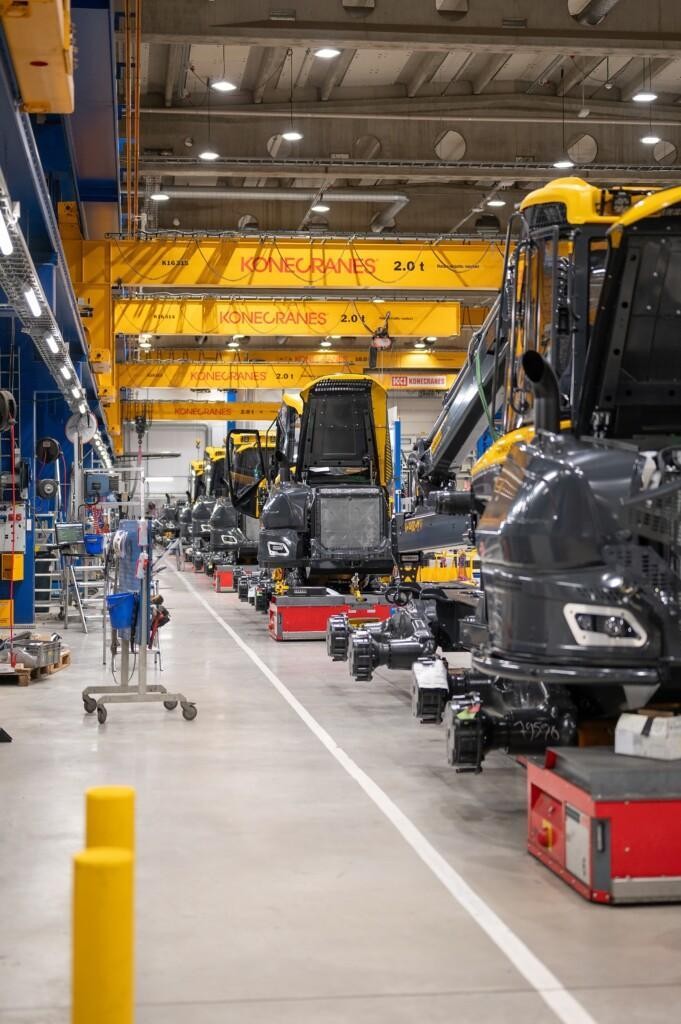
their final shape.
A separate production line and testing site for harvester heads are located next to the
main line. All harvester heads for Ponsse’s machines, as well as those sold separately, are completed there.
From the last station of the main production line, machines are transferred to the
delivery equipping area. There, machines are washed and inspected before their test drive. A machine test drive takes about eight hours, and Ponsse employs several full-time test drivers. Most harvesters are tested in forests. Some forwarders are also tested in forests, where they pick up trees felled by harvesters during their test drive, whereas the rest of the machines are tested on a two-kilometre test track near the factory. A test report is completed for each machine, including the items to be tested. After the test drive, machines are returned to the delivery equipping area, where
they are washed and equipped for delivery to the customer.
Safely at work
Every day, some 600 Ponsse people work at the factory, of whom 130 work in parts manufacturing, roughly 200 in assembly and delivery equipping, and 40 in logistics.
The factory personnel are trained and encouraged to make safety observations.
In addition, the performance-based remuneration of the personnel also encourages
employees to achieve the target of zero accidents. Solutions and tools that make
working easier and improve ergonomics are developed at the factory along with solutions that make the work of machine operators easier and more efficient. Focus is also on safety equipment. The number of occupational accidents is monitored actively, and each nearmiss incident or accident will be investigated and analysed with Ponsse’s occupational safety and health team. The number of occupational accidents has decreased significantly in recent years.