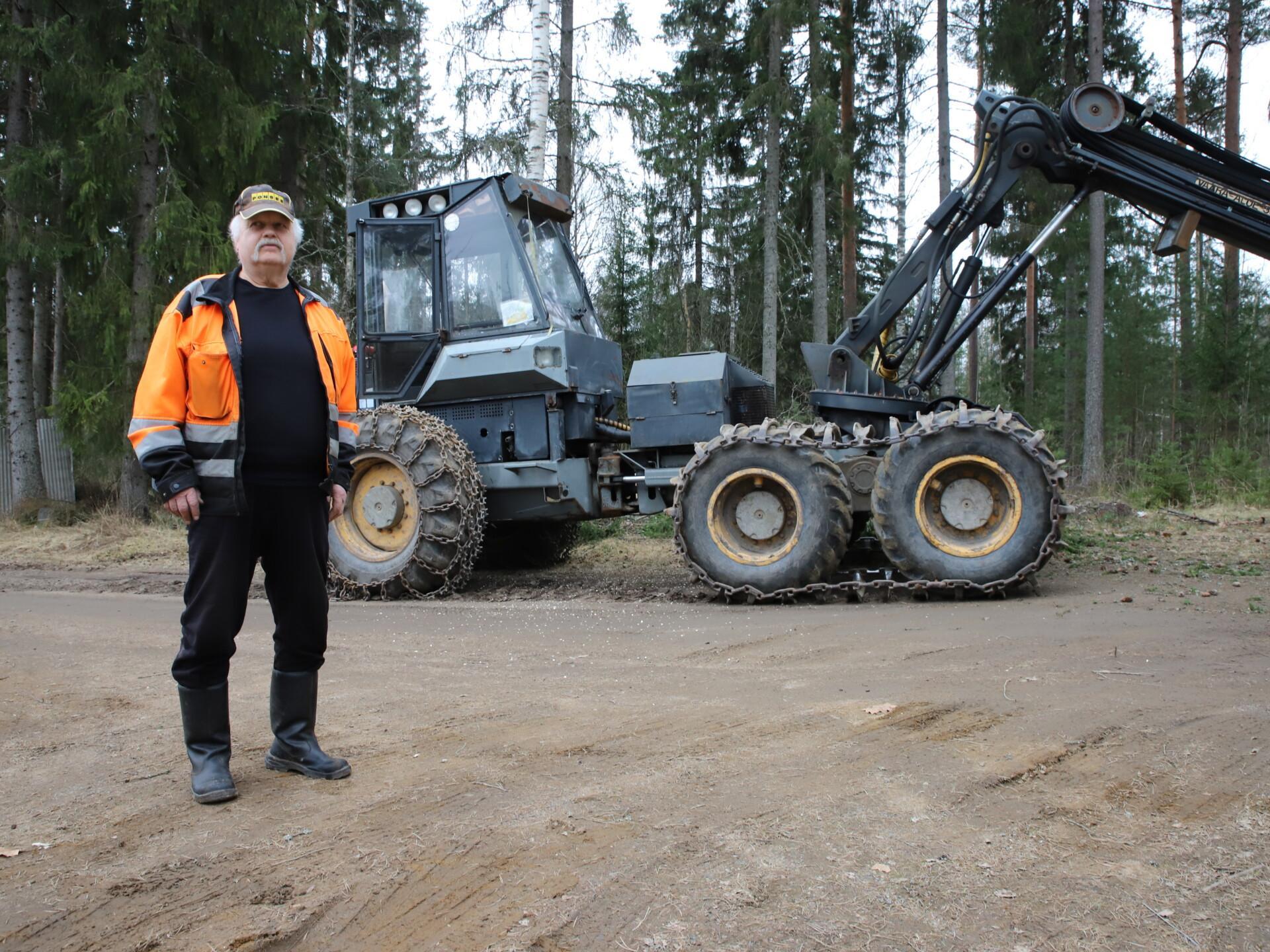
Esko Kallio bought a new Ponsse HS15 harvester and operated it for 30 years
Esko Kallio, a contractor based in Hyvinkää, Finland, bought a new Ponsse HS15 Ergo harvester in 1996. The machine was a perfect fit for him and proved to be very reliable. When it became clear over the years that his sons were not planning to take over the contracting business, Kallio decided to keep working without upgrading his machine. Now, after 30 years, the harvester has run for 17,500 hours and harvested an estimated 700,000 cubic metres of wood. Kallio is now selling the machine to a former Ponsse service mechanic, who plans to restore it.
If any machine has ever paid for itself, Esko Kallio’s Ponsse HS15 certainly has.
“The machine cost 1,963,000 Finnish marks new, with a three-year payment schedule. That felt like a heavy burden back then. Right after leaving the factory, the machine went to a demonstration in Jämsänkoski and was delivered to me with 50 hours on the clock. From there, it went straight to work in the forest,” Kallio recalls.
Kallio had become acquainted with Ponsse and its founder, Einari Vidgrén, in the early days of the company. He was present, for example, at a forestry demonstration along Tuusulantie in 1973 or 1974, where Ponsse was one of only two machines capable of climbing the steep hill chosen for the test. This demonstration is even documented in Ponsse’s official history books.
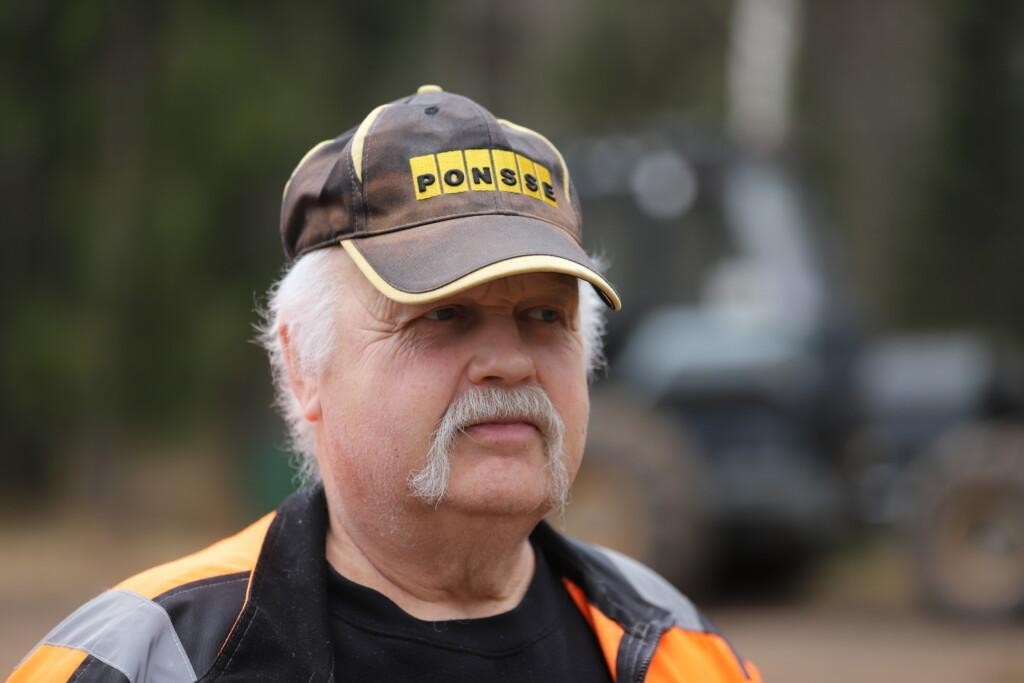
Esko Kallio has been contracting with his Ponsse HS15 for 30 years. The machine has accumulated 17,500 operating hours and harvested an estimated 700,000 cubic metres of timber.
“At just 15 years old, my father and I were already hauling timber with a tractor. We had a Massey Ferguson and a winch from Peltosalmen Konepaja. When my father retired, I set up my own business and bought my first machine in 1975. It was a 1973 model Farmet, and I had to trade in my car to get it.”
Kallio hauled timber in Hyvinkää region within a radius of roughly 100 kilometres. Initially, other contractors felled the trees, either manually or by machine, and Kallio took care of the forwarding. Later on, he expanded his fleet to include a harvester alongside his forwarder. His clients included local forestry associations, Schaumann, Koskitukki and Vapo, and he also cleared power line rights-of-way for Imatran Voima.
Over the decades, machines came and went. Kallio tried out Kockums, Volvos, Valmets, ÖSAs, Juonto-Lokkeris and many others. There were a couple of Ponsse PAZs, as well as a one-off prototype manufactured by Ponsse. In total, Kallio has owned 13 Ponsse machines over the years.
“Einari asked me to become a partner in a trotting horse”
Ponsse, Einari Vidgren and Esa Vidgren became very familiar to Esko Kallio. For example, they collaborated on developing a measuring device for harvester heads, using a Tunturi moped’s front sprocket as a starting point. Soon they achieved 95% accuracy, which was an astonishingly good figure at the time.
“I got to know Einari and Esa well. Esa handled the paperwork. When I picked up my first machines from Vieremä, there was only a small log cabin and maybe a 150-square-metre workshop. Bills of exchange were negotiated right there with Einari. Sometime in the 1980s, Einari asked me to become a partner in a trotting horse, but I passed. I can’t recall the horse’s name, but it wouldn’t have been a great investment.”
While Kallio has always spent long hours operating his machine, he has also had employees. However, they never worked in three shifts; two shifts were enough. During its first year, the HS15 logged 2,500 hours, followed by a steady average of around 2,200 hours per year for several years after. In recent years, the machine has been operated for around 500 hours per year. Alongside the HS15, Kallio owns a 1980s Ponsse Bison forwarder, a tracked excavator and a flatbed for moving the machines.
“No repairs needed”
Kallio praises the durability of the HS15. Neither the engine nor the Clark gearbox has ever had to be opened up. The cabin interior remains original, but the measuring device has naturally been upgraded. He is currently on his second harvesting head: the first processed around 400,000 cubic metres, and the current one has harvested roughly 300,000 cubic metres. The body panels are sun-faded, but surprisingly straight and rust-free. The machine bears serial number 799.
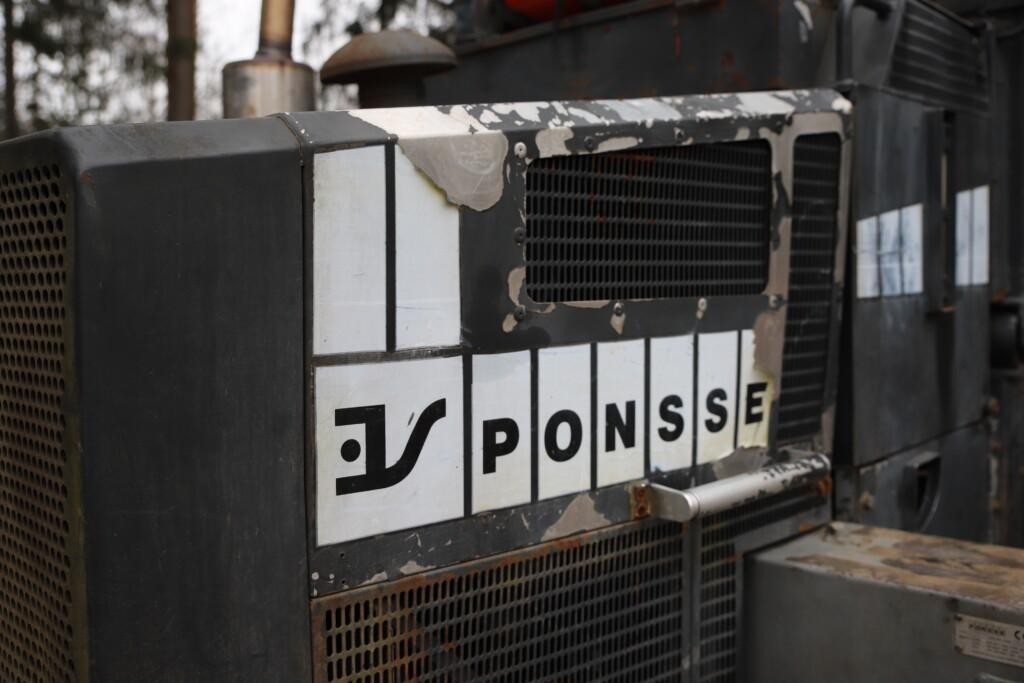
The machine’s body panels remain straight, and the chassis paintwork is largely intact. However, sunlight has faded the yellow decals to white.
“We’ve rarely needed a service mechanic. I’ve done the oil changes myself. On the right-hand side of the chassis, under the crane, I had to weld a 15-centimetre seam once. Otherwise, there has been no need to weld anything.”
This longevity is also a credit to the operator.
“We never thrashed the life out of the machine. We haven’t been overly cautious either, but we have operated the machine sensibly. Back in the day, it harvested well over 500 cubic metres a day.”
Needless to say, Kallio has been very satisfied with his harvester. He knows the machine inside out, and it has never left him stranded.
“I’d buy a brand new one just like this if I could. It weighs only 16 tonnes with liquid-filled tyres, and 13 tonnes dry. Being a six-wheeler, it’s so short, narrow and agile that you hardly even notice the trails during thinning operations. Forest owners like it because the tree roots stay intact and you don’t get long, straight and wide trails. You can even weave around a bit with this machine.”
In the spring of 2026, however, the time has come for Kallio to part ways with his trusty workmate. The HS15 is moving on to a second owner, a former Ponsse service mechanic who plans to fully restore it and put it back to hard work. Kallio will keep his forwarder and excavator, but he remains secretive about his plans for a new harvester.
“Well, I’m not going to shed tears over the HS15, even though it’s been a great machine. I could always buy a new Scorpion to replace it if the trade-in price was right. But let’s see what happens – you can always get a machine if you really want one,” Kallio says with a laugh.
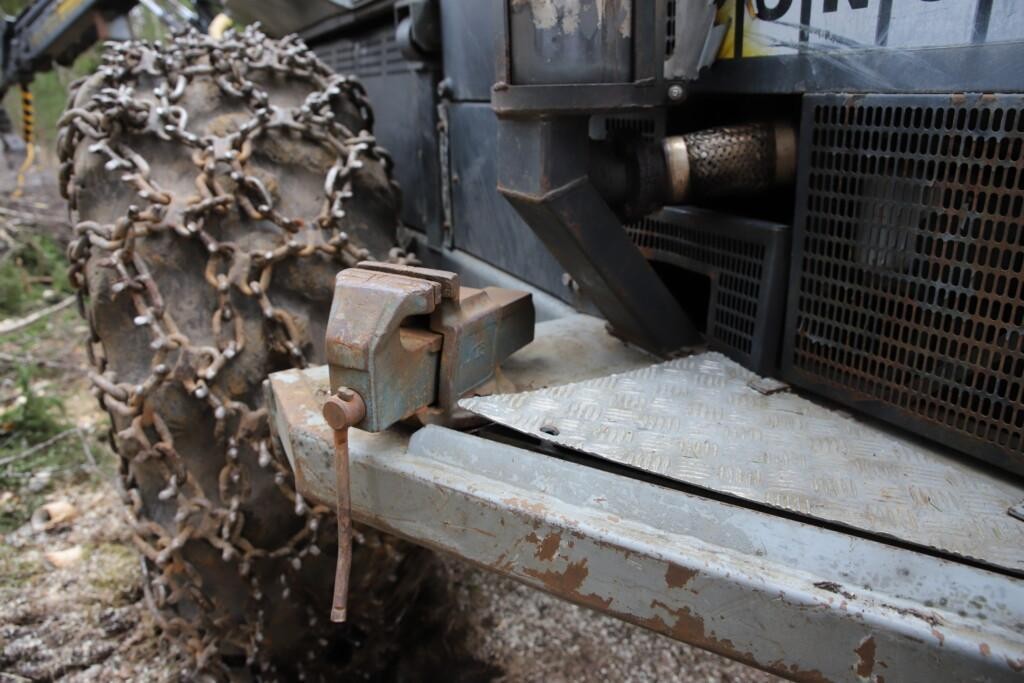
Esko Kallio customised the machine to his liking. A bench vice mounted on the front mudguard has stayed firmly in place for nearly 30 years, serving as a handy aid for many maintenance tasks.
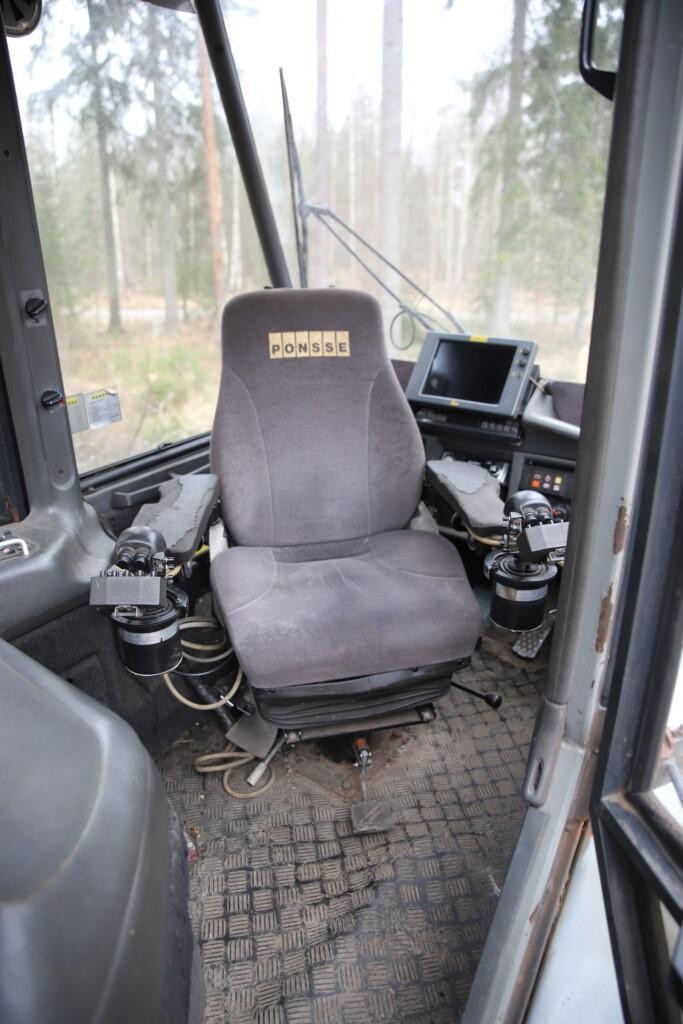
Apart from the measuring device, the cabin interior is entirely original. You can hardly fault the upholstery for durability, even if 30 years and 17,500 operating hours have left it slightly frayed in places.