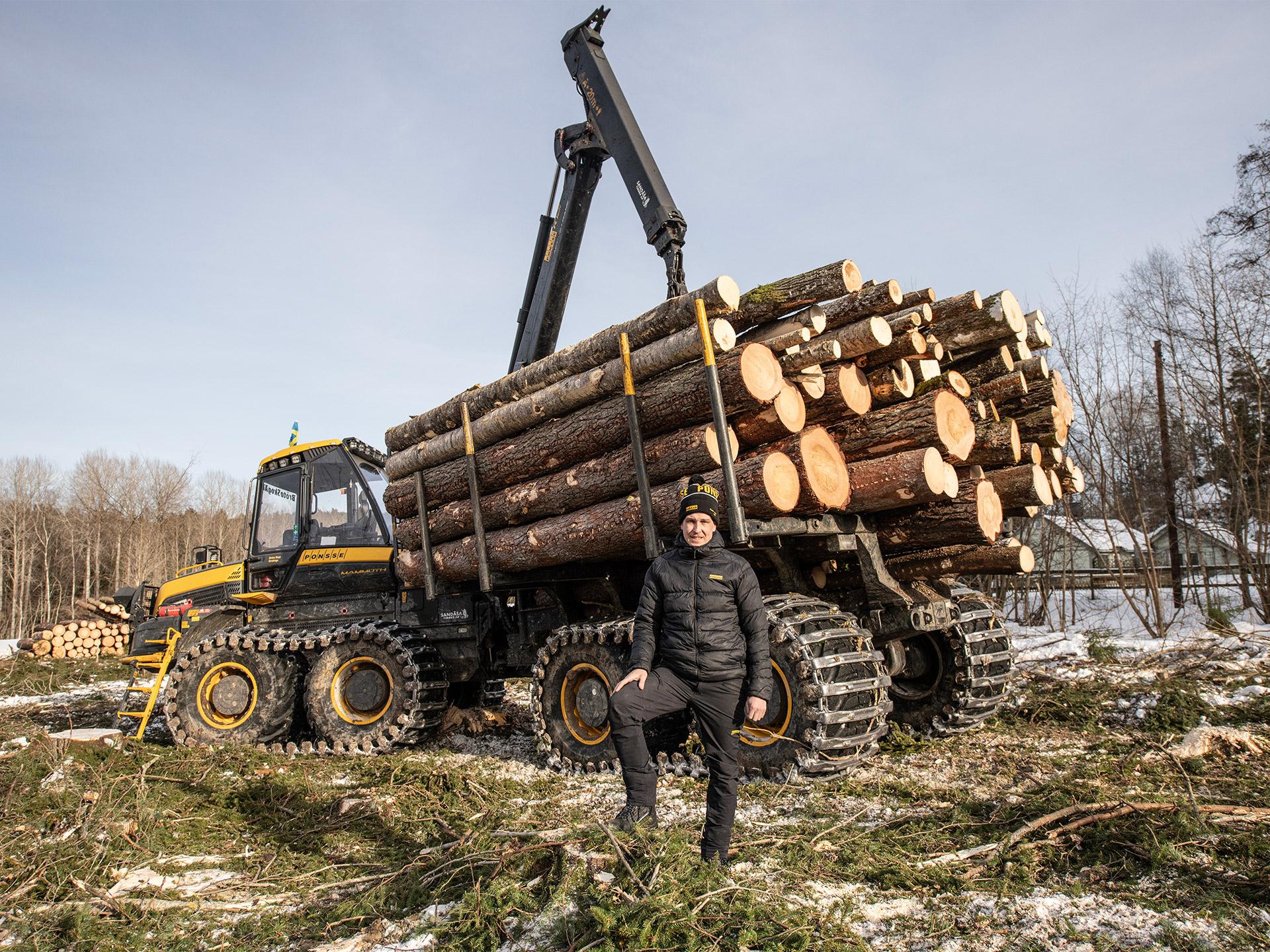
Ponsse Mammoth proves — Power, stability and above all, joy of work
“It’s simply brilliant,” says forwarder operator Alexander Hjalmarsson as he fills the load area of his Ponsse Mammoth. He is particularly impressed by the smooth and quiet CVT transmission and the seat that turns with the operator. He also appreciates the impressive load capacity.
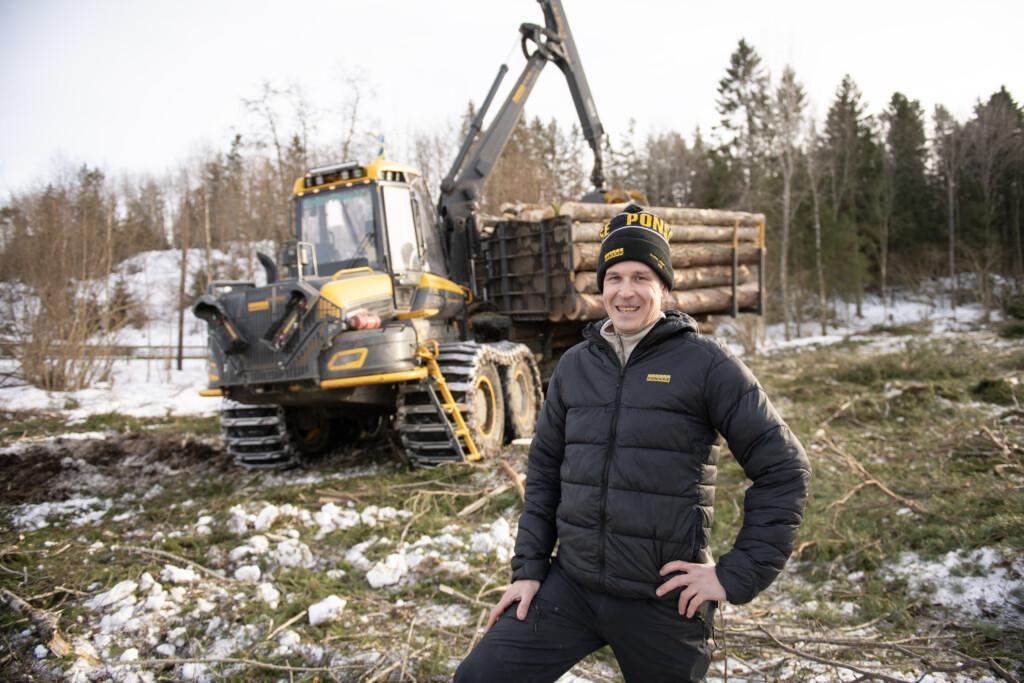
It’s a beautiful winter’s day as Bröta Skog AB is carrying out final felling in Kagghamrain Sörmland, between Södertälje and Nynäshamn. Much of the forest consists of hefty trees, and the load area of Alexander’s Mammoth fills quickly as he takes on spruce, pine and aspen.
At the time of our visit, Alexander had been operating the machine for two years. Previously, he operated a Ponsse Elephant King.
“Yes, it’s true: the load capacity increased by five tonnes,” Alexander says, clearly pleased.
He was already accustomed to a spacious cabin and a powerful loader, but beyond the 25‑tonne load capacity, there are two features he particularly appreciates: the stepless CVT transmission and the swivelling seat.
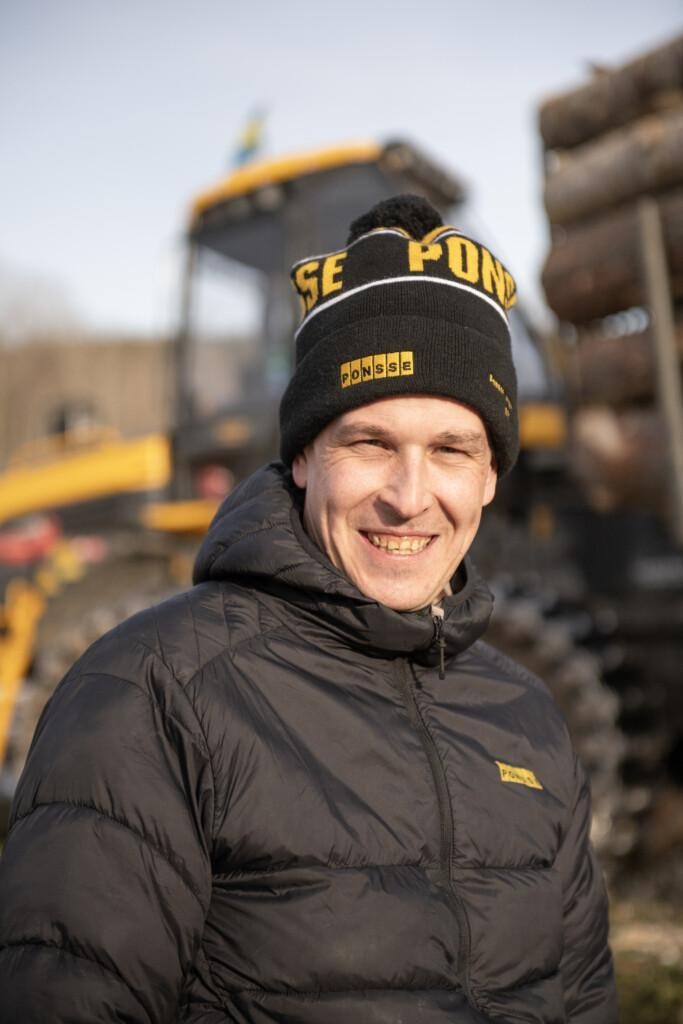
“The transmission feels very stable and makes the cabin much quieter. And the seat is absolutely brilliant. I put my feet on the footplate, and the whole seat follows the movements of the grapple. Visibility improves, and
your body – especially your neck – is spared,”
The machine is easier to operate thanks to a small accelerator pedal on the footplate, and the forward–reverse control is managed using a button on left panel of the seat. The swivelling seat can be switched off if needed, but Alexander has never had any reason to do so. The seat, the control handles and the cabin suspension also earn high marks from him.
“This machine has the same loader as the previous one. It’s strong, has great reach and, above all, is pleasant to use.”
Alexander’s Mammoth was one of the first to enter the market. In his experience, the machine has been stable both in its construction and in its performance.
“It has just kept on rolling. And if anything unexpected happens, we know the
service technicians will arrive quickly and do everything they can to get us back to work as soon as possible.”
He glances at the hour meter with a smile – it now reads 3,800 hours.
Alexander also appreciates Ponsse’s motto, “a logger’s best friend”.
“It also means a great deal to us as operators that the salesperson is genuinely interested in our work and comes out to greet us in the forest.”
Mammoth carries even better than its predecessors
When it came time to replace the machine, Alexander was initially a little doubtful about its size. The doubt, however, faded quickly.
“It combines size, power, agility and ergonomics. The long wheelbase and long
bogie provide excellent stability, while the CVT transmission takes the driving experience to an entirely new level. The difference is especially noticeable in certain spots, such as roadside landings, where you can pick up the pace a little.”
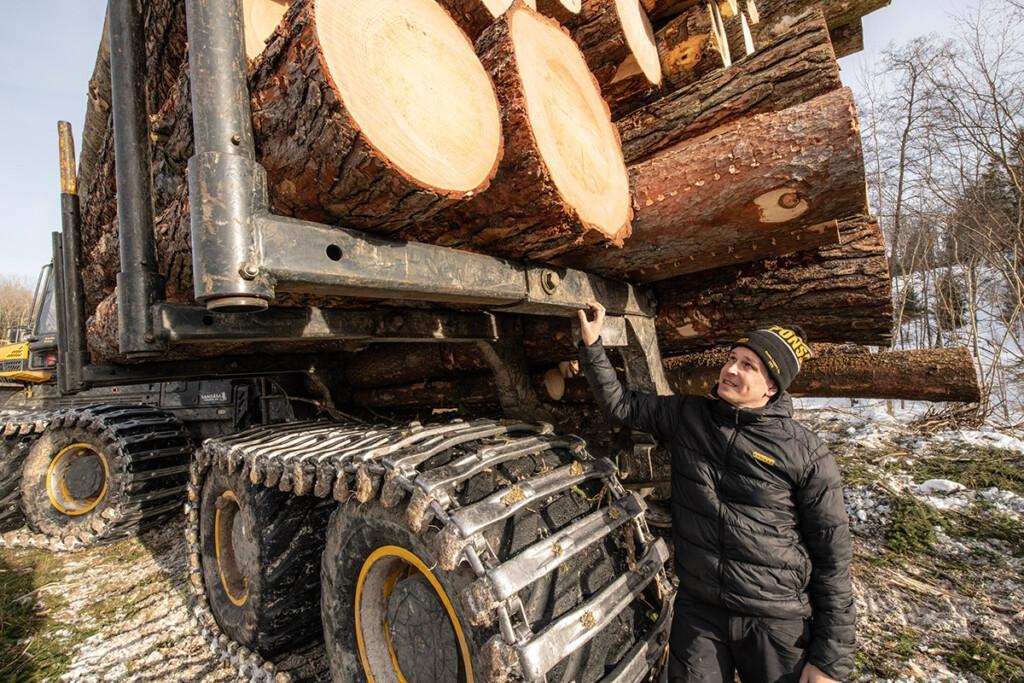
The same features that make the forwarder stable and smooth to drive also improve its carrying capacity and reduce terrain damage – surprisingly much for a machine of its size. According to Alexander, the Mammoth carries even better than its predecessor.
At the end of each shift, Alexander goes through the machine’s lubrication points and carries out a general inspection. In his view, the Mammoth is a very reliable partner.
“I had the same impression of the Elephant King. It was really safe and comfortable to drive. The Mammoth makes work even more fun. I enjoy working with the machine immensely. It feels as if I’ve upgraded – in every way.”
The forest took a longer stem
Alexander’s interest in forest machines stems partly from his childhood: his father serviced forest machines and his grandfather operated them. His interest led him to study natural resources, and he has stayed on that path ever since. Over the course of his career, he has mostly operated Ponsse machines – and has no intention of switching.
He also enjoys his work at Bröta Skog. “Things are well-organised here, the machinery is in good condition and everything runs smoothly. That makes it easier and more fun to do a good job.”
Alexander usually comes in to collect the timber after Jimmy Johansson has finished. Jimmy owns Bröta Skog jointly with his brother Joakim Thor Allstrin and Stefan Everlid. Jimmy has been in the forest since he was young: his father and uncle ran timber trucks. Although he trained as an electrician, the forest ultimately won out.
“I’m quite a social person, but I appreciate the peace of the forest. Here you’re free to be on your own. Now it would feel strange to have a job where you have to deal with people all the time.”
Ponsse felt genuinely interested
In the early days of the company, the machines were bought used, but these days they purchase new ones.
“We want to produce, not spend our time repairing. Of course, you still have to do it, but not on the same scale.” Their first Ponsse machine was a Wisent
thinning forwarder.
“We liked both the machine and the company. The people felt close and genuinely
interested in us, not just when the deal was signed.”
Jimmy praises Ponsse’s people as downt-to-earth, easy to approach and genuinely passionate about forest machines.
“When you can go golfing even with the senior management, it says a lot. This is not the case in many large companies. I’m sure it creates mutual added value.”
The Ponsse Mammoth was also chosen because Alexander likes working with large loads.
“We saw the perfect combination of capacity and ergonomics in the Mammoth. And, admittedly, the appeal of a brand‑new machine played a part as well.”
Jimmy’s philosophy is that it’s better for a machine to be slightly oversized than
undersized.
“Many say that large forwarders require long driving distances to be profitable. I
disagree. In final felling, a large forwarder is never worse than a small one – not even on short distances.”
A large machine also consumes less fuel per cubic metre. According to Jimmy, worries about larger machines causing more extensive terrain damage are unfounded – the differences are minor and can even favour the larger machine.
“It all depends on the whole.”
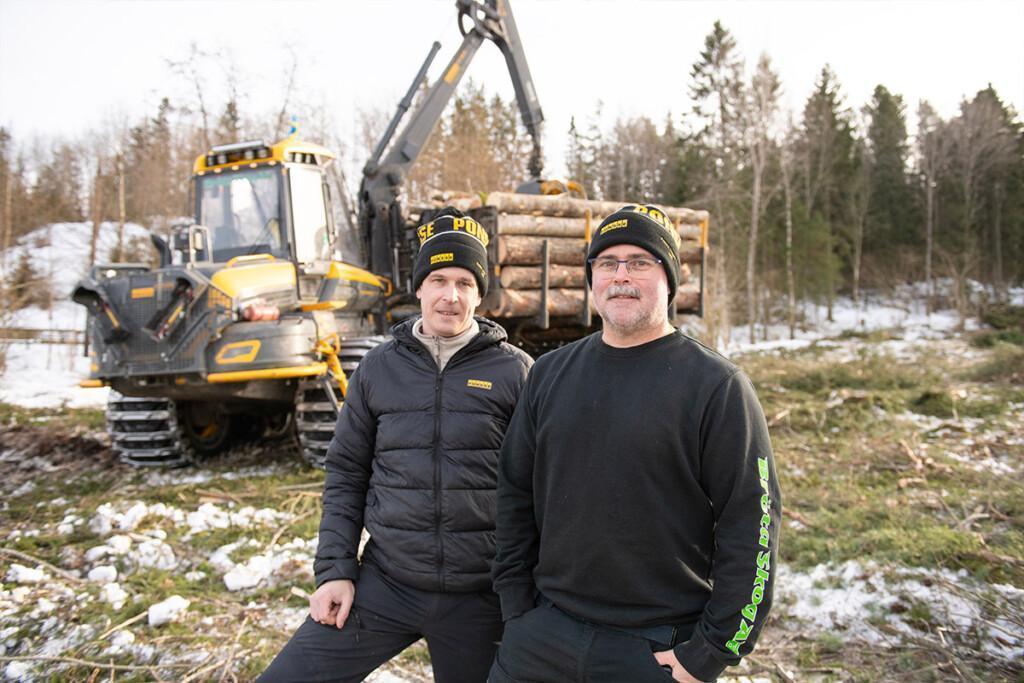
It’s the outcome that counts
From an economic and production perspective, it’s the overall outcome that matters.
“With the Mammoth, we achieved a clear increase in production, and when that is combined with lower fuel consumption per cubic meter, the impact on the economy is positive. The machine is, of course, more expensive to purchase, and the final result will only become clear in the post‑calculation.”
The goal of the company’s three owners is to keep operations running, ensure employee well-being, deliver high-quality work and keep the company’s finances in good shape.
“We’ve been fortunate to attract highly skilled operators – and we take good care of them. It’s great that the machines now run on a single shift. It’s better for both the people and the machines.”
BRÖTA SKOG AB, GRÖDINGE
Founded: 2002
Location: Bröta, between Södertäljen and Nynäshamnin, Sörmland
Operating area:
Thinning: mainly within a radius of 70 km
Final cutting: within a radius of around 170 km
Owners: Jimmy Johansson, Joakim Thor Allstrin and Stefan Everlid
Machinery: Three machine chains: in thinning, the Ponsse Scorpion and
Ponsse Elk; in final felling, the stems are collected by the Ponsse Mammoth
Customers: Sandåsa Timber AB (final felling), Skogssällskapet (thinning),
Holmen AB (final felling)