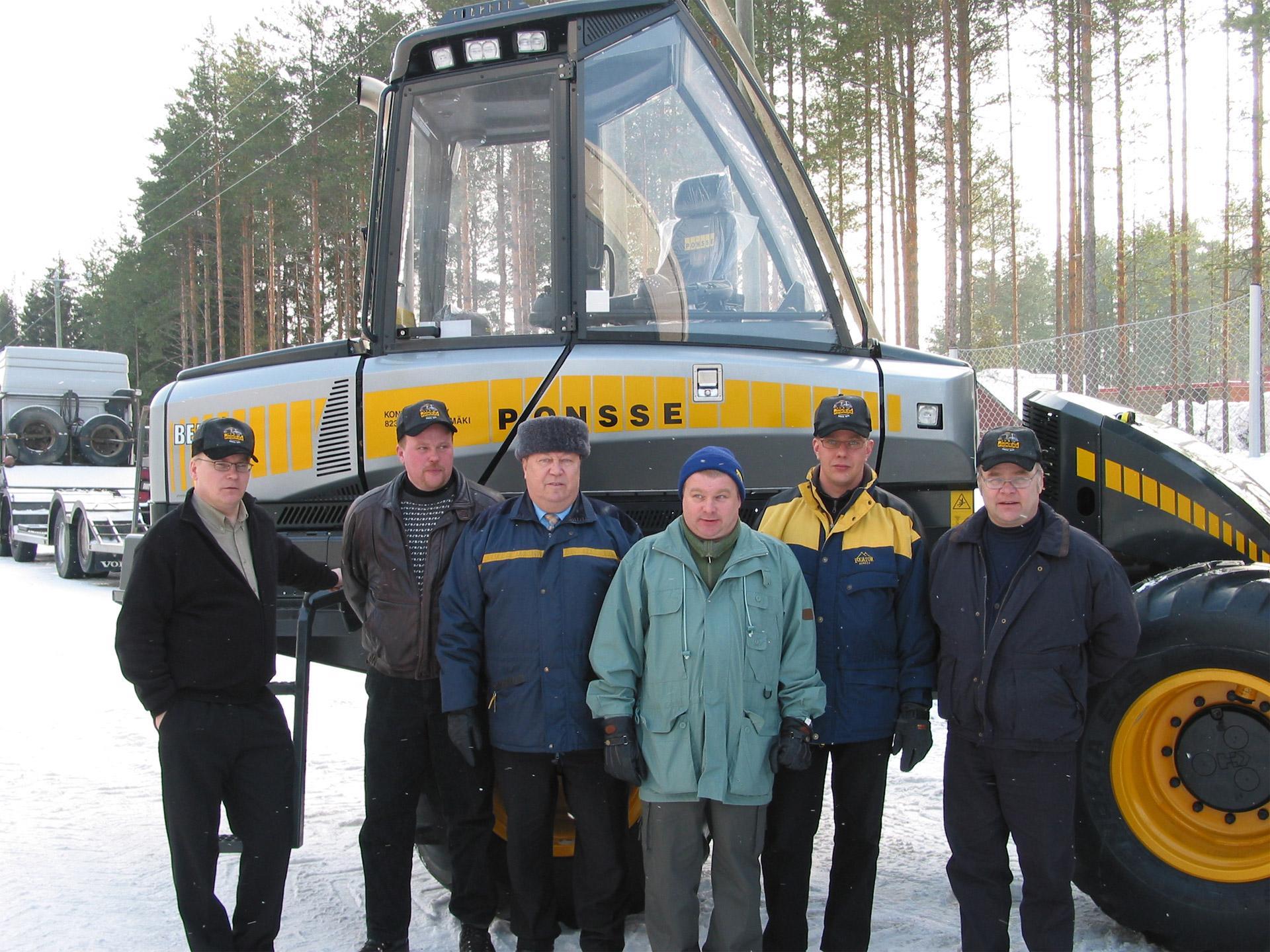
“Rather than being a pushy salesman, I was an attentive listener”
Well-rouded Risto Suorsa heads into retirement
Risto Suorsa is perhaps best known as a machine salesman in Eastern Finland and Upper Savonia, but he originally joined Ponsse in 1992 to work in documentation. From there, his work led him through production planning and the order‑to‑delivery centre to sales. Over the decades, the company has grown, the production method has shifted from cells to an assembly line, and forest machines have advanced to an entirely different level compared with the early 1990s.
Risto Suorsa comes from the village of Marttisenjärvi in the northern part of Vieremä. Suorsa had wanted to stay in his home region, even though, for example, as the salesman for Eastern Finland, the commute was 120 kilometres one way, and his annual mileage exceeded 100,000 kilometres.
“In 1982, I was hired by Rautaruukki in Otanmäki, which manufactured railway carriages. I completed Rautaruukki’s own vocational school and stayed on to work at the company. One morning shift, when I was tired and the conveyor roller on the plate cutting machine caught the sleeve of my overalls, I realised this wasn’t what I wanted to be doing for the rest of my life. I took study leave and trained as a mechanical engineering technician in Kajaani while continuing to work. After finishing my studies, I returned to Rautaruukki in 1989, only for the work to end in 1990 when the Soviet Union collapsed and exports of railway carriages stopped,” Suorsa says.
Suorsa came to Iisalmi for an entrepreneurship course. After the course, Ponsse engineer Jouko Kelppe recruited him into documentation in 1992. At that time, Ponsse had 120 employees, whereas today the Group employs 2,200 people. Back then, documentation involved producing spare parts and service manuals in ten languages, compared with 26 languages today.
“The HS10 harvester was the first one I produced the manuals for. The old manuals served as the basis, and I gathered the information for the new machine from product development. It took a few months. Then the manuals were translated into other languages. The other models were the HS15 harvester and
the S10 and S15 forwarders. One summer, I was assisted by Jarmo Vidgren, who at the time was a teenager working in the department for the summer.”
The machines were built one at a time
In 1995, Suorsa, who was well-versed in the structure of the machines, was transferred to production planning, where his task was to divide the machine into
modules for efficient production, for example, central lubrication is selected on the optional equipment list with a single tick, but in practice it requires a considerable
number of parts and installations in various locations around the machine.
“At that time, there was no production line along which the machine was built; instead, the machine stood in one place and was assembled there from start to finish. There were five such stations in the hall that today houses the wiring harness production. The system was flexible. For example, if there were parts shortages, some machines could end up waiting several days for the missing parts, while others were being built nearby. Today, this would not be possible on the line.”
At the end of the 1990s, production was moved onto an assembly line, although it
was much shorter than the one used today. In 2001, the engines changed from Caterpillar, Valmet and Perkins to Mercedes‑Benz. Up to 1996, the engines in use had been Perkins and Valmet. Around half of the machines were exported.
“I worked extensively with foreign dealers, who were always interested in the machines’ equipment and completion schedules. Einari Vidgren, on the other hand, was always interested in how many orders the factory was receiving. In the difficult years of the 1990s, he would come in every morning and ask, ‘Have
any orders come in?’ If there were, he would say, ‘It’s beginning to look better’. Einari was quite a powerful builder of team spirit.”
“How about becoming a salesman?”
In 2002, Einari Vidgren asked Suorsa one day to join him on a test logging site. Suorsa had the feeling that Einari wanted to discuss something, and he was right: Einari suggested that he join the sales team in Eastern Finland.
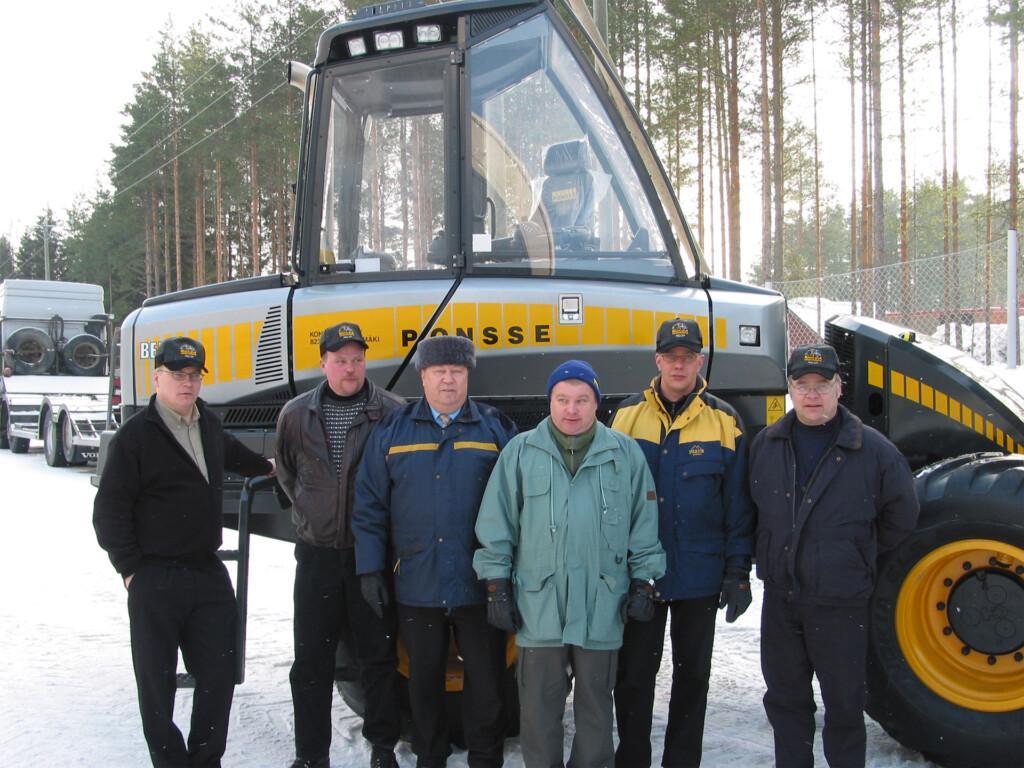
“Well, I couldn’t exactly say no. My home was in Siilinjärvi, my office 120 kilometres away in Joensuu, and my sales area covered Eastern Finland from Valtimo to Kesälahti and from Kuopio to Ilomantsi. I ended up driving more than 100,000 kilometres a year.”
Suorsa knew the machines well, but had to get to know the customers. At first he tried to imitate his predecessor’s style, but contractor Simo Kuittinen advised him, “Just be yourself, Risto,” and it turned out to be good advice.
“Rather than being a pushy salesman, I was an attentive listener. Many customers
grew familiar and were loyal to the brand, but you can never take any deal for granted.”
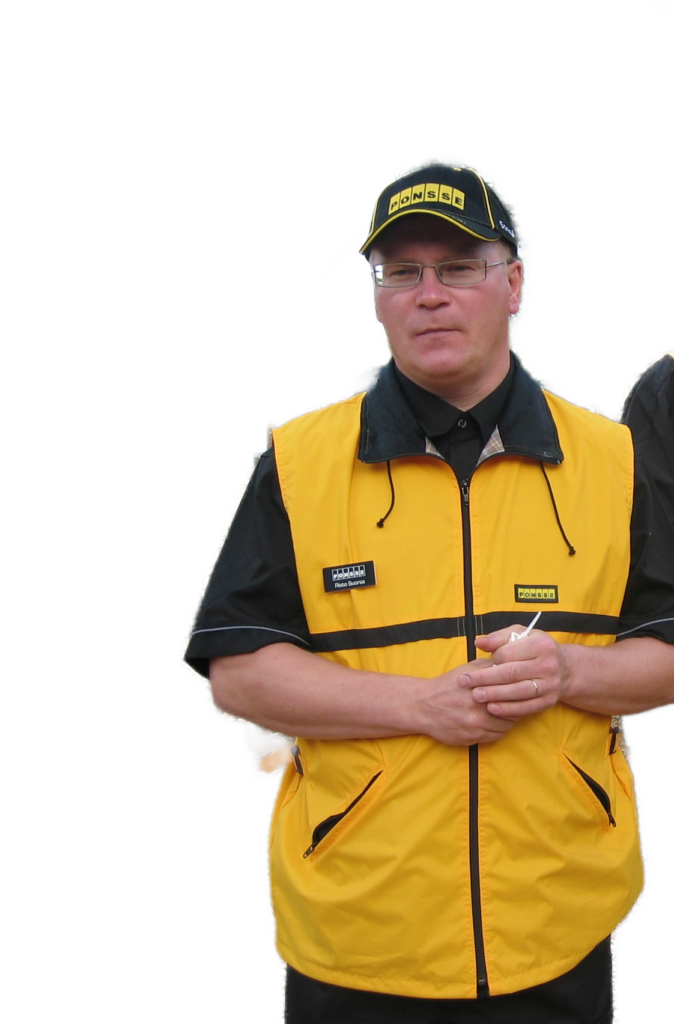
“With new customers, the key was the good availability of our maintenance services and spare parts – those sealed the deal, not me. In price negotiations, there is not much leeway, and the most important thing is to get the price of the
used machine right.”
While working as a salesman, Risto would deliver the most urgent spare parts shipments directly to customers alongside his sales work. Risto has been fully committed to Ponsse throughout his career, and has shown flexibility whenever required.
At the turn of the 2020s, Suorsa took up a sales role back in his home region in Upper Savonia and Kainuu. His yearly mileage fell by half.
Fishing, travelling and vintage cars
Suorsa is an avid hunter and fisherman. In retirement, there will be more time for these hobbies. Right after retiring, a fishing trip to Sweden awaits, followed a couple of months later by one to the Arctic Ocean in Norway.
He has a motorhome and a few vintage cars in his garage. His wife is also newly retired, so now is the time to travel together.
“I have renovated Volvos and Saabs. My Volvo 940 is a 1994 model, the Saab 900 a 1987 model, and the Volvo 240 a 1987 model. They rack up a few thousand kilometres every summer.”
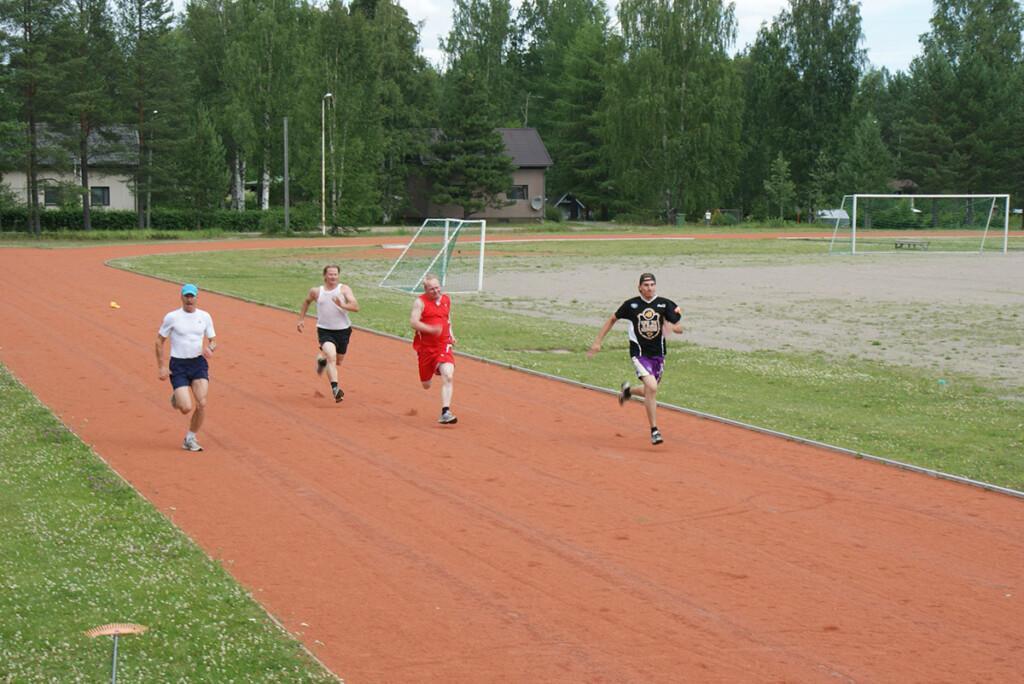
His years at Ponsse have also included all sorts of trips, such as to trade fairs or seminar trips. Brazil, Uruguay or Argentina are places he would hardly have travelled to otherwise.
“I have been able to do all sorts of things at Ponsse, and not once have I minded getting up for work in the morning. My thanks go to our customers for this journey,” Suorsa sums up.
Risto’s career reflects the true spirit of Ponsse. He has taken on each task with real drive and has never backed away from a challenge. That kind of life’s work simply isn’t possible if you are keeping an eye on the clock. When he needed to improve his language skills, he travelled to Ponsse’s site in Scotland at his own expense so he could learn quickly. Trust with customers was built through genuine caring. Even in the toughest recession years, when machine sales stalled,
Risto kept visiting customers, calling them and checking in. He raised the bar for customer service to an exceptionally high level throughout the company.